
Table of Contents
- Ad Fatigue: What Is It?
- Monitor Your Ad Campaigns
- Adjust Maximum Frequency to Reduce Ad Fatigue
- Run Multiple Ads at the Same Time
- Ad Fatigue: Keep an Eye on Automation
- Make Visual Changes to Your Ads to Minimize Ad Fatigue
- Create Event-Themed Ads
- Make the Most of Lookalike Audiences
- Automatically Reduce Budgets for High-Frequency Ad Sets
- Use the Reach Campaign Objective on Facebook Ads
- Keep Retargeting Budgets Small
Ad Fatigue: What Is It?
Ad fatigue can happen on any channel, whether traditional or digital. It occurs when your target audience sees your ads so often that they stop paying attention. Their engagement drops. Your ads no longer capture any attention. The impressions you are paying for are no longer having any effect. And this makes sense: your customers do not want to see the same ad over and over again.
At that point, your campaigns (and your brand) become a genuine nuisance.
How does your campaign reach this point?
It is actually simple.
Ad fatigue sets in when ads appear so frequently that viewers become accustomed to their presence. And while they are no longer paying attention, you are still paying for it. It is a wasteful spend that could be put to better use elsewhere.
To help you get the most out of your digital campaigns, the following sections offer several ways to avoid ad fatigue (and avoid being annoying):
Monitor Your Ad Campaigns
The first step to preventing ad fatigue is to monitor your ad campaigns. You will not know that your audience has lost interest in your ads if you are not monitoring them.
When you regularly review your ads, you can see when audience interest starts to decline.
So what metric should you track to identify Ad Fatigue?
If you suspect there is ad fatigue but are not sure, keep an eye out for the following common signs:
-
Lower click-through rate (CTR) Probably the most important metric for tracking and addressing ad fatigue, as your click-through rate (CTR) can quickly determine whether viewers are willing to engage with your brand. If this ratio decreases considerably over time, fatigue may be to blame.
-
Very high cost per click (CPC) This is one of the biggest signs of ad fatigue. It is the first clue that your ad has been reaching a larger audience. A high view frequency generally means that viewers are seeing your ad multiple times per day; and if that is the case, they are probably getting bored with it. If this higher CPC goes hand in hand with lower performance figures, such as a reduced click-through rate (CTR), you will immediately know that ad fatigue is the culprit.
Adjust Maximum Frequency to Reduce Ad Fatigue
You should start by limiting the frequency of your ads, especially if the performance of previous campaigns has shown that a higher frequency lowers performance.
In Google Video and Display ads, you can (https://support.google.com/google-ads/answer/117579?hl=es) per user using the frequency capping feature.
Facebook offers the option to set a frequency cap to limit the number of times someone will see your ad within a given time period, as well. Note that Facebook only allows you to set a frequency cap for campaigns using the Reach and Frequency buying type; by choosing that buying type and a Reach or Brand Awareness objective, you will have access to estimated data:
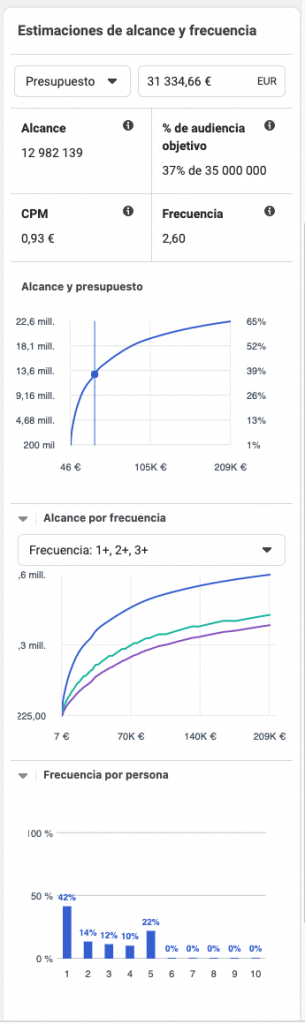
It is also useful to know the industry benchmarks for ad frequency. Sometimes you can find this through a simple Google search, but often you will need the help of an industry-specific tool or a digital marketing agency. Of course, if you have been running campaigns for a while, you can review your campaign performance and set your own cap as well. And you can always run tests to discover your own company’s frequency limits.
Run Multiple Ads at the Same Time
It is recommended that you always measure the performance of ads against another ad that is currently in rotation. You can test one thing at a time and continue updating and optimizing based on each ad’s performance. This will allow you to keep refining.
Serving unique content to your target audience will also help prevent ads from becoming stale.
 Compare
Ad Fatigue: Keep an Eye on Automation
Although using automated bidding options to optimize for clicks or conversions is useful, advertising platforms do not take all your needs into account. As a result, you may notice that even when using automation, Ad Fatigue can start to appear due to platform or algorithm oversight. Since wasteful spend in the eyes of an advertiser is still just “spend” in the eyes of a platform, preventing ad fatigue is not always at the top of platforms’ priorities.
Therefore, it is always worthwhile to monitor each ad’s performance over time to make sure it is not getting more visibility than it should. If you notice that a low-performing ad is receiving more investment than it should, investigate what other factors may be contributing to its overuse.
Has the ad been in the account for a long time, leading the platform to value its history? Is the ad a specific size that has more inventory available? Does the ad copy inadvertently attract clicks from an audience with a lower propensity to convert? You can then use those insights to make data-driven decisions that will increase your return on investment.
Make Visual Changes to Your Ads to Minimize Ad Fatigue
When you rotate your ads, it is recommended to use new designs. Replace previously used images, whether in the background or foreground, to keep things fresh. Something as simple as adding new colors can go a long way in re-engaging your audience. You should also experiment with variations of your ad copy.
Keep testing different elements such as body text, new headlines and calls to action as well. Make sure to test and adjust as you learn and put different ads in your campaign. The success of your campaign depends on reviewing, iterating and experimenting creatively with your ads. A successful campaign means minimal ad fatigue, and that is a big win.
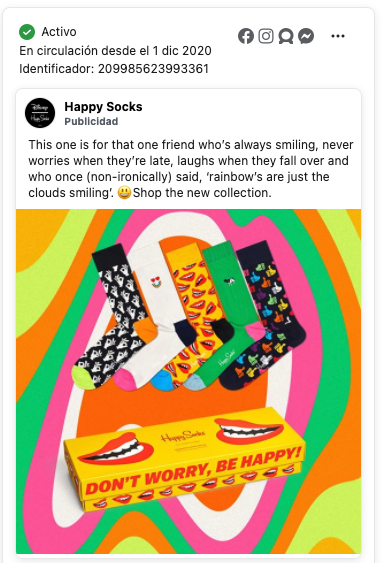
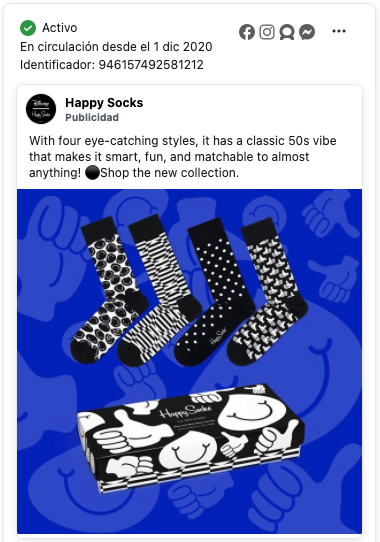
Happysocks – Same theme, different texts and images
Create Event-Themed Ads
Creating event-themed ads can make them more relevant and improve your results.
It also naturally helps keep your advertising fresh — because there is only a limited time window to run an event promotion. From Valentine’s Day to new collection launches, Black Friday, Back to School, Earth Day, Christmas, New Year’s…
 ZaraHome – Event campaign, elegant and effective
Event-themed ads work incredibly well for certain businesses. People expect to take certain actions during the holidays — they are ready to buy gifts at Christmas and chocolate at Easter. Taking advantage of this, wherever possible, can significantly improve the profitability of your advertising campaigns.
Make the Most of Lookalike Audiences
Just because a certain audience has grown tired of your ads does not mean you have to abandon that campaign entirely.
There may be other audiences that could also generate great results. One of the best ways to find these people is with a lookalike audience.
A lookalike audience consists of people who are very similar to another group of people — for example, you can create a lookalike audience based on your current customers. The lookalike audience will then contain people who are very similar to those who have already purchased your products.
This is a fantastic targeting option, and it often outperforms the original audience. To create a lookalike audience on Facebook, I invite you to read this article (https://lionelz.com/blog/audiencias-similares-en-facebook-crear-oportunidades/#Como_creo_una_audiencia_similar).
Automatically Reduce Budgets for High-Frequency Ad Sets
Pausing ads with a high frequency will stop them from being served, but what if it is a high-converting ad set and you do not want to pause it entirely? Another solution is to reduce the budget. If your ad sets are being served to the same people too often, you can reduce your bid/budget to lower the frequency.
What counts as a “healthy frequency”? It depends mainly on your campaign objective and the audience you are targeting. For most advertisers, the (https://www.socialmediatoday.com/news/facebook-ad-frequency-how-high-is-too-high) falls between 1.8 and 4.
You can create an automated rule that will attempt to reduce the budget for ad sets with high frequency.
!(/wp-content/uploads/2020/12/regla.png)
Use the Reach Campaign Objective on Facebook Ads
If you have a campaign suffering from ad fatigue, you can try duplicating the campaign and simply changing the campaign objective to Reach. Reach campaigns are typically used to reach a wider audience.
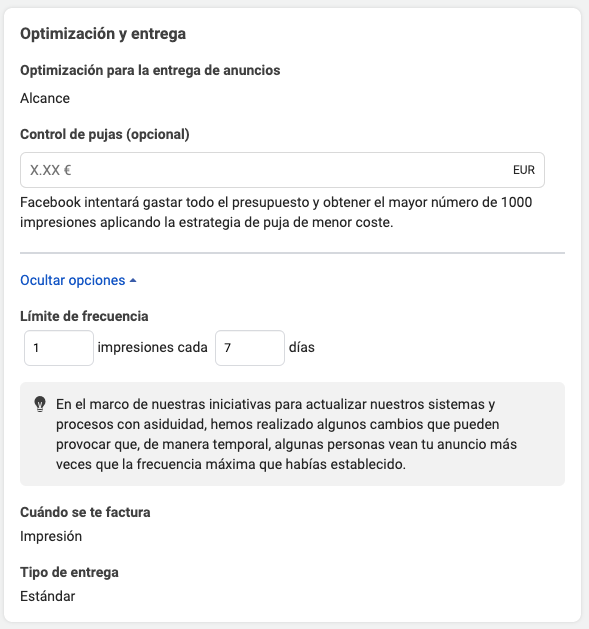
Reach campaigns are optimized for a daily frequency by default, and have special options to limit frequency at the ad set level. The default setting is no more than two impressions every seven days, but you can customize the frequency cap over a time period.
Keep Retargeting Budgets Small
Ad fatigue on Facebook can be a massive problem with retargeting campaigns — those campaigns that “follow” people who have previously visited us.
Retargeting on Facebook is done by targeting custom audiences. Custom audiences can be created from a range of data elements, including customer lists, email lists and website visitors.
Custom audiences are almost always significantly smaller than cold audiences, which means ad fatigue will set in much sooner. By keeping retargeting budgets small, you prevent people in your custom audience from seeing your ad too many times.
What counts as “small” for your retargeting campaigns will depend on the size of your custom audience. A great way to tell if your budget is too large is to monitor the frequency of your ads:
If that frequency number increases dramatically in a short period of time, your budget is too high.
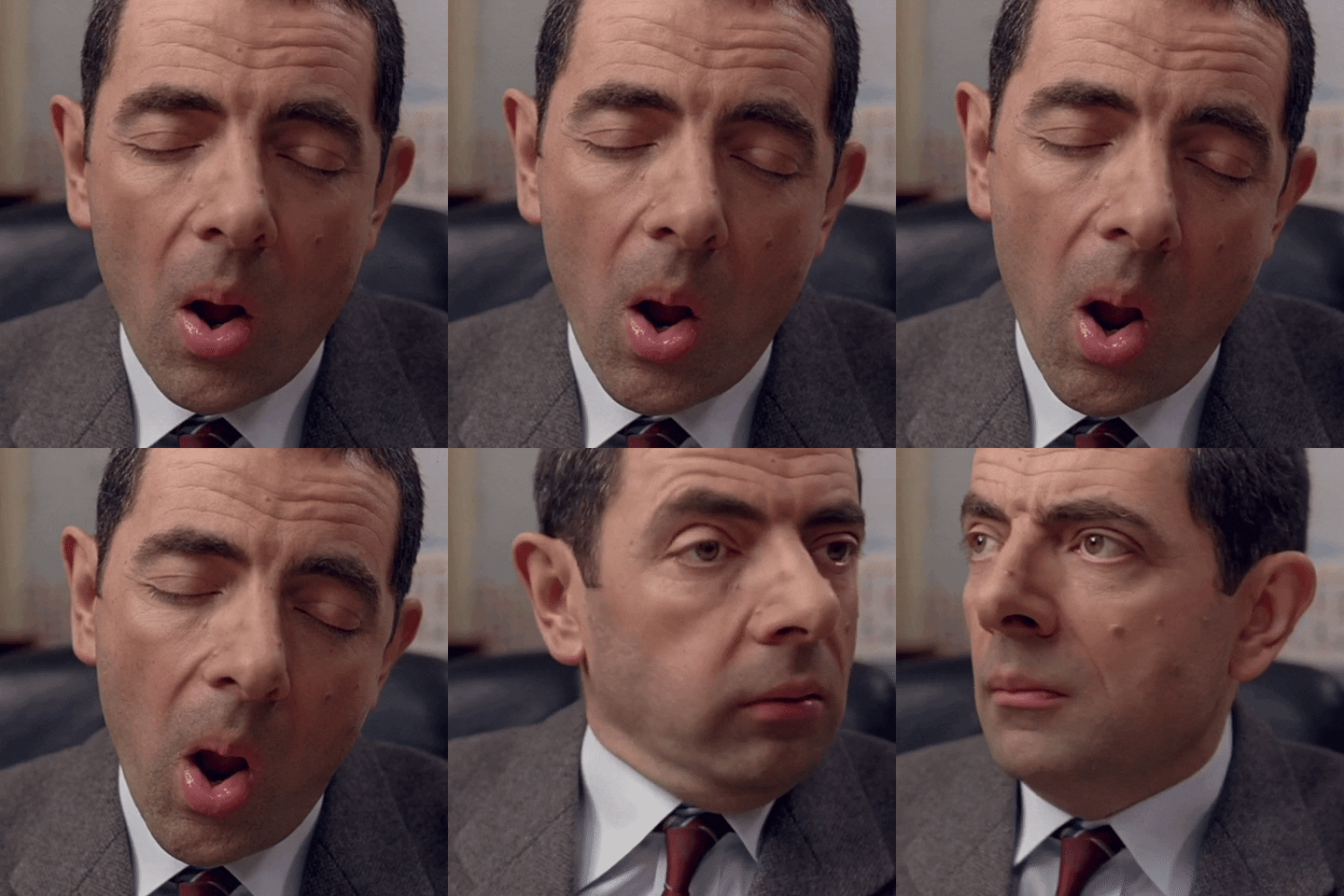 No more fatigue…