CRO copywriting for product pages 2026
Persuasive copywriting for product pages: benefits over features, scannable text, and microcopy that reduces friction.
In this article
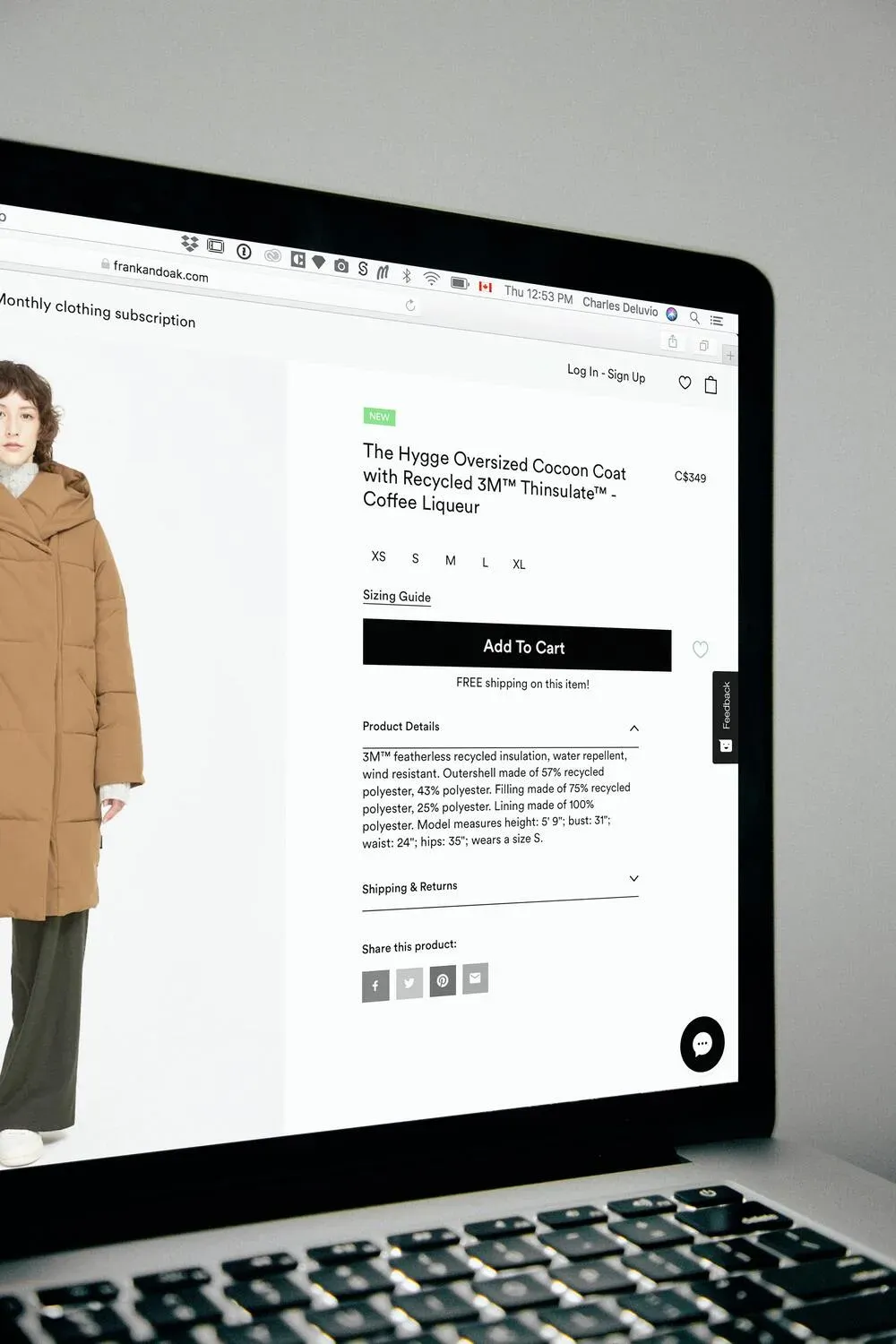
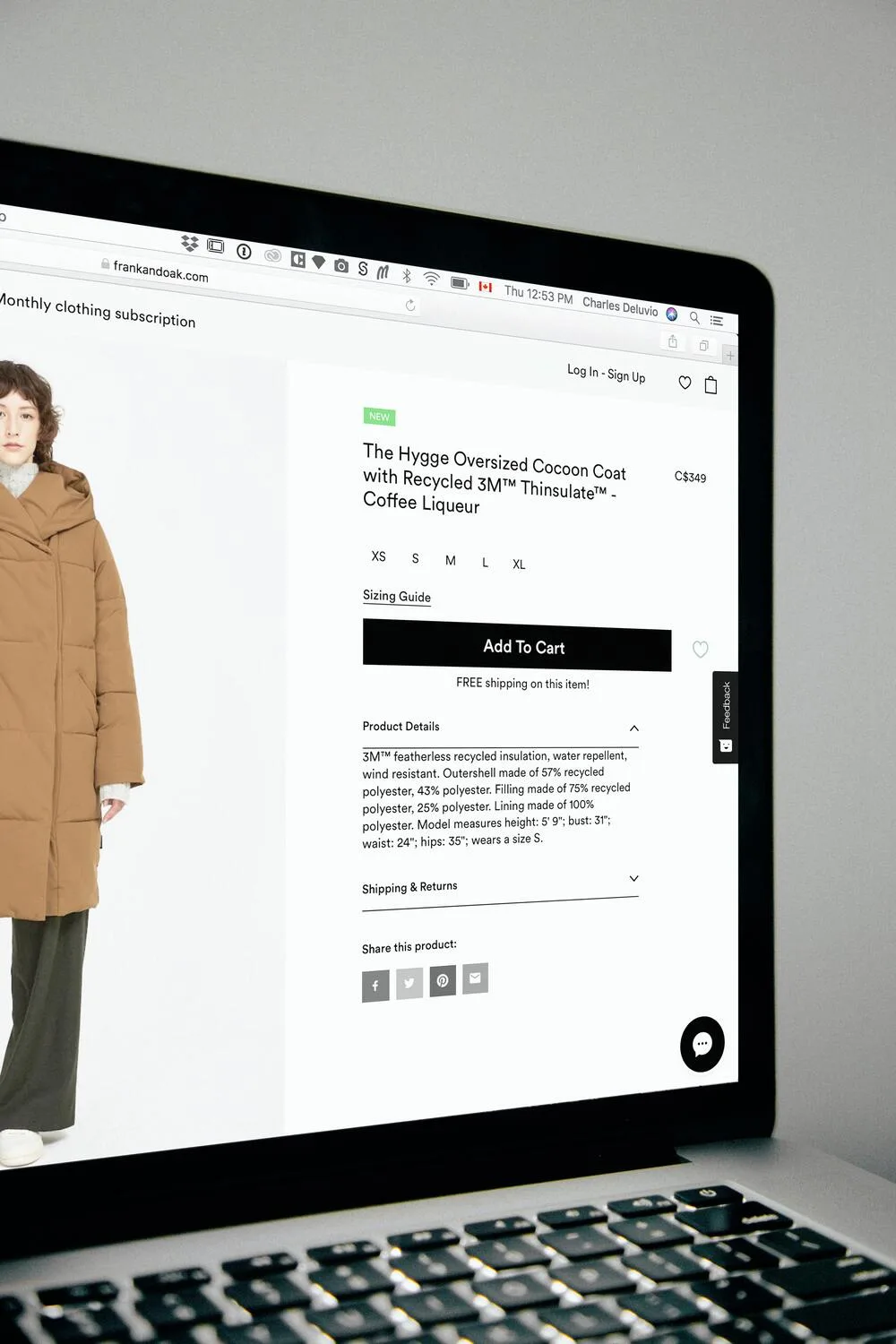
Most product pages describe the product. The ones that convert sell the result of buying it. That’s the whole difference between copy that fills the gap under the photo and copy that moves the conversion needle. What I see on most pages is a list of features (material, dimensions, specs) and little else, as if the buyer could translate “10,000 mm membrane” into “your feet won’t get wet” on their own.
Product page copywriting isn’t decoration, it’s removing the doubts that stall the purchase and showing why this product solves what the person is looking for. This guide covers why your product copy doesn’t convert, how to write benefits instead of features, how to structure the text so it gets scanned, and how to use microcopy to remove friction. It’s the writing part; the broader page optimization I cover in 19 ideas to optimize the product page.
In 30 seconds:
- Copy that describes features doesn’t convert; copy that translates those features into benefits does
- People scan, they don’t read: the text has to be understood at a glance, not in a dense paragraph
- Microcopy (CTA, shipping, returns, stock) reduces friction right at the moment of deciding
- Anticipating objections in the copy (sizing, materials, timeframes) removes the doubts that stall the purchase
- It’s not writing more, it’s writing what removes the brake on buying
Why doesn’t your product copy convert?
For two reasons that almost always go together: it describes instead of persuading, and it’s written to be read when people scan.
The first is fundamental. A page that says “merino wool coat, 450 g, reinforced stitching” is giving data, not reasons to buy. The buyer has to do the work of translating that data into what matters to them (will it keep me warm? will it last?), and many people don’t: they just leave. Persuasive copy does that translation for them.
The second is about form. Nielsen Norman Group’s classic research on how users read on the web found that 79% of users scan pages and only 16% read word-by-word, and that concise, scannable text improved usability by 124% in their tests. If your page is a dense four-line paragraph, most people don’t read it. The copy has to be understood at a glance.
How do you write benefits instead of features?
With a question behind each feature: “and what does that mean for the person buying?”. That’s the “so what” test.
Every technical spec has a benefit translation. The feature is what the product is; the benefit is what happens to the person who uses it. The trick is not stopping at the data, but reaching the consequence for the buyer:
| Feature (what it is) | Benefit (what it means) |
|---|---|
| Waterproof membrane 10,000 mm | Your feet stay dry even if it rains all day |
| 5,000 mAh battery | Charges your phone twice without hunting for a socket |
| Combed organic cotton | Soft from day one, none of that cheap-cotton stiffness |
| 30-day returns | Try it at home risk-free; if it doesn’t fit, send it back |
It’s not about removing the features (they’re needed to decide), but about not leaving them alone. The pattern that works is: feature plus its benefit, together. “Combed organic cotton, soft from the first wash”. The spec gives credibility; the benefit gives the reason to buy.
How do you structure the text so it gets scanned?
By thinking of the eye that jumps, not the one that reads straight through. Since most people scan, structure matters as much as the words.
Four rules I always apply:
- The important thing, first. The first line of the description has to state the main benefit, not the brand story. If the most relevant part is on line four, it doesn’t get read.
- Bullets for features. A bullet list gets scanned; a paragraph with the same features doesn’t. Specs go in short bullets, not in prose.
- Bold on what anchors. One or two bold words per block guide the eye toward what matters most. If everything is bold, nothing stands out.
- Short sentences. One idea per sentence. The dense paragraph of subordinate clauses is exactly what scanning skips.
The same logic of writing to be understood fast applies to the text that shows in Google, which I work on in meta descriptions at scale: the space is little and the attention, less.
How do you use microcopy to reduce friction?
Microcopy is those small texts around the buy button, and they decide more conversions than their size suggests.
The places where it pays off most:
The CTA itself. “Add to cart” is neutral; in some cases a CTA reflecting the benefit or the moment (“Get yours”, “Try it at home”) performs better. It’s not magic, it’s testing, but the button copy matters.
Next to the button. This is where microcopy really removes friction: “Free shipping over £30”, “Free 30-day returns”, “Delivered in 24-48 h”, “Last 3 units”. Placing the guarantee or the timeframe right where the person decides removes the doubt at the exact moment it appears.
In the form and the cart. Small texts that clarify (“you won’t be charged until the end”, “you can edit the order later”) reduce abandonment. Checkout friction I cover in 20 ideas to optimize the checkout.
Microcopy is cheap to change and one of the best effort-to-impact ratios there is, because it acts in the millisecond of the decision.
How do you answer objections in the copy?
By anticipating them. Every purchase has doubts that stall it, and the copy that resolves them before they turn into abandonment is the one that converts.
The typical ecommerce objections are always similar: will the size fit me? is it good quality? how long does it take? what if I don’t like it? Persuasive copy answers them without waiting for the person to go looking for the answer (because often they don’t, they leave). A clear size guide, a line about the material and its origin, the visible delivery time, and a returns policy with no fine print answer the four most common doubts within the page itself.
On mobile this weighs even more, because the space is smaller and so is patience. How to adapt the page and its copy to the small screen I cover in mobile CRO for ecommerce. The general rule: every objection the copy doesn’t answer is a person who leaves to find the answer and doesn’t come back.
Frequently asked questions
What matters more on a product page, features or benefits?
Both, but together. Features give credibility and data to decide; benefits give the reason to buy. The mistake is leaving features alone, expecting the buyer to translate “10,000 mm membrane” into “my feet stay dry” on their own. The copy that converts does that translation.
How much text should a product page have?
As much as needed to answer the buying doubts, no more, no less. Since people scan, structure matters more (benefit first, bullets, microcopy) than length. A short, scannable page that resolves the objections converts better than a long, dense one nobody reads through.
Does product copywriting affect SEO or only conversion?
Both, but its main job is conversion. Good copy reduces doubts and drives the purchase; along the way, unique, useful text (not the manufacturer’s description repeated) helps SEO. But the goal of product copy is to persuade, not to rank; SEO is a secondary benefit.
What is microcopy on a product page?
It’s the small texts around the buying decision: the button text, the shipping and returns notices next to the CTA, the cart clarifications. Although they take up little space, they reduce friction right at the moment of deciding, so they usually have a very high effort-to-impact ratio.
How do I write benefits without making things up?
Always starting from a real feature and translating it into its consequence for the user, without exaggerating. “Organic cotton, soft from the first wash” is an honest benefit based on a fact. “The softest cotton on the market” is a baseless superlative that costs credibility. The benefit is derived from the feature, not invented above it.
Conclusion: product copy removes brakes, it doesn’t decorate
A product page converts when its copy does two things: translates features into benefits that matter, and answers the doubts that stall the purchase, all in a format that gets scanned at a glance. It’s not writing more, it’s writing what removes the brake.
The practical order: start with the first line of each page (state the main benefit, not the brand), turn the loose features into feature-benefit pairs, put the shipping and returns microcopy next to the button, and review which typical objection you’re not answering. They’re writing changes, cheap and fast, and among the ones that move conversion most without touching the design or the price.
If you want us to review your product copy and where you’re losing conversions to friction, you can book 30 minutes of consulting.

Could your ad campaigns
perform better?
30 minutes to review your situation and tell you exactly what I would change. No pitch, no sales proposal.