Checkout Optimization: 20 Ideas to Reduce Cart Abandonment (2026)
70.22% of carts are abandoned at checkout. 20 fixes for 2026: Shop Pay, BNPL, guest checkout, form fields, and page speed impact.

In this article
The Baymard Institute estimates the average cart abandonment rate at 70.22% across global ecommerce, based on 50 independent studies (Baymard Institute, 2025). Seven out of ten users who add a product to their cart don’t complete the purchase. But here’s the number that really matters: better checkout design can boost conversion by 35.26%. In the U.S. and EU alone, there are $260 billion in lost orders that are recoverable through payment experience improvements.
If you want a structured diagnosis before making changes, a heuristic checkout analysis is the recommended first step.
Key takeaways
- 70.22% of carts are abandoned before completing a purchase (Baymard Institute, 2025)
- Shop Pay converts 91% more on mobile than a standard checkout (Shopify, 2025)
- Adding BNPL to checkout increases revenue by 14%, and two-thirds of that volume is net new sales (Stripe, 2025)
- Guest checkout can improve conversion by up to 45%; 26% abandon because they’re forced to register (Baymard Institute, 2025)
- Each additional second of load time reduces conversion by 4.42% (Portent, 2025)
Key fact: The average ecommerce cart abandonment rate is 70.22% globally according to the Baymard Institute (2025, based on 50 studies). The top three causes are: extra costs that are too high such as shipping and taxes (39%), delivery that’s too slow (21%), and lack of trust to enter credit card details (19%). A better-designed checkout can recover 35.26% of those lost orders.
Why do shoppers abandon their carts?
Before optimizing, you need to understand why users leave. The Baymard Institute breaks down the main causes of abandonment based on September 2025 data (Baymard Institute, 2025):
| Cause of abandonment | % of users |
|---|---|
| Extra costs too high (shipping, taxes, fees) | 39% |
| Delivery too slow | 21% |
| I don’t trust the site with my credit card | 19% |
| Forced to create an account | 19% |
| Checkout too long or complicated | 18% |
| Unsatisfactory return policy | 15% |
| Website errors or crashes | 15% |
| Can’t calculate total cost upfront | 14% |
| Not enough payment methods | 10% |
| Card declined | 8% |
The biggest drivers of abandonment aren’t technical problems. They’re design and communication failures: hidden costs, forced registration, and unnecessarily complex flows. The 20 ideas that follow address exactly these.
1. Visible security at the moment of payment
19% of users abandon because they don’t trust the site with their credit card details (Baymard Institute, 2025). HTTPS is the bare minimum, but it’s not enough on its own. Visual security signals (padlocks, McAfee Secure logos, Norton Secured, Verified by Visa) reduce anxiety right when the user pulls out their card. Recognized payment brand logos (Visa, Mastercard, PayPal) also work as implicit trust signals.
For a deeper look at how cognitive biases affect purchase decisions, check out that guide.
2. Trust elements and social proof
Trust isn’t built with logos alone. Testimonials and ratings on the checkout page act as social proof at the critical moment. Recognized payment provider logos (PayPal Verified, Google Trusted Store) complement that signal. If your checkout has a visible section with verified reviews from recent customers, users see that other people have completed the process without issues.
3. Visible, high-contrast CTA
Is your “Complete order” button actually visible? There are still stores where the CTA gets lost among other elements. The button needs a contrasting color against the background, a generous size on mobile, and clear text that tells the user exactly what happens when they tap it. “Pay $49.90” works better than “Continue.”

4. Mobile-first checkout
Mobile traffic accounts for over 70% of total ecommerce traffic, but mobile conversion rates remain well below desktop: 2.9% versus 3.9% (Smart Insights, 2025). Even more telling: the mobile cart abandonment rate hits 85.65%, compared to roughly 70% on desktop.
That gap isn’t a purchase intent problem. It’s a checkout experience problem. A form designed for mouse and keyboard feels hostile on a phone. Some details that make a real difference: showing a numeric keypad when users enter their phone number or postal code, auto-filling the address from the postal code, and offering mobile-optimized payment methods (Apple Pay, Google Pay). To better understand ecommerce conversion metrics, check out that guide.
5. Accelerated checkout: Shop Pay, Apple Pay, Google Pay
Shop Pay converts 91% more on mobile and 56% more on desktop than a standard checkout (Shopify, 2025). Accelerated checkouts eliminate the need to fill out forms: one tap, biometric authentication, purchase complete. In 2026, this isn’t an extra. It’s a user expectation.
Digital wallets (Apple Pay, Google Pay, Samsung Pay) will account for 61% of all global ecommerce transactions by 2027 (Checkout.com, 2026). If your checkout doesn’t offer them, you’re losing sales to competitors who do.
6. Offer multiple payment methods
10% of abandonments happen because there aren’t enough payment methods available. The essential methods vary by market:
| Payment method | Country/Region |
|---|---|
| Bizum | Spain |
| Cartes Bancaires | France |
| iDEAL | Netherlands |
| Giropay | Germany |
| Postepay | Italy |
| Bancontact | Belgium |
| Paysafecard | 43 countries |
Don’t forget gift cards. In some markets, cash on delivery is still relevant for users who’d rather not enter their banking details online.
Buy now pay later (BNPL)
Adding BNPL to checkout increases revenue by 14%, according to a Stripe test with over 150,000 sessions. More importantly: two-thirds of that volume is net new sales, not cannibalization of other payment methods (Stripe, 2025). Solutions like Klarna, Afterpay, or Affirm allow customers to split payments directly at checkout. Showing the installment amount near the price (“From $12/mo”) lowers the barrier on high-ticket products.
The global BNPL market will reach $560 billion in 2025, with 99.7 million users in the U.S. alone (eMarketer, 2025).
7. Guest checkout: don’t force registration
26% of users who abandon checkout do so because they’re forced to create an account. Allowing guest checkout can improve conversion by up to 45% (Swell, 2025). Your customers came to your store to buy, not to sign up.
The fix? Offer registration after the purchase. Once the user has already paid, you can suggest creating an account to track their order. It’s the perfect moment: they’ve just shown you their trust.
Passkeys and biometric authentication
Modern browsers support passkeys and biometric authentication (Face ID, fingerprint). For registered users, this allows logging in and completing payment with a single gesture. No passwords. No friction. If your platform supports it, it’s a worthwhile improvement to implement.
8. Reduce form fields to the minimum
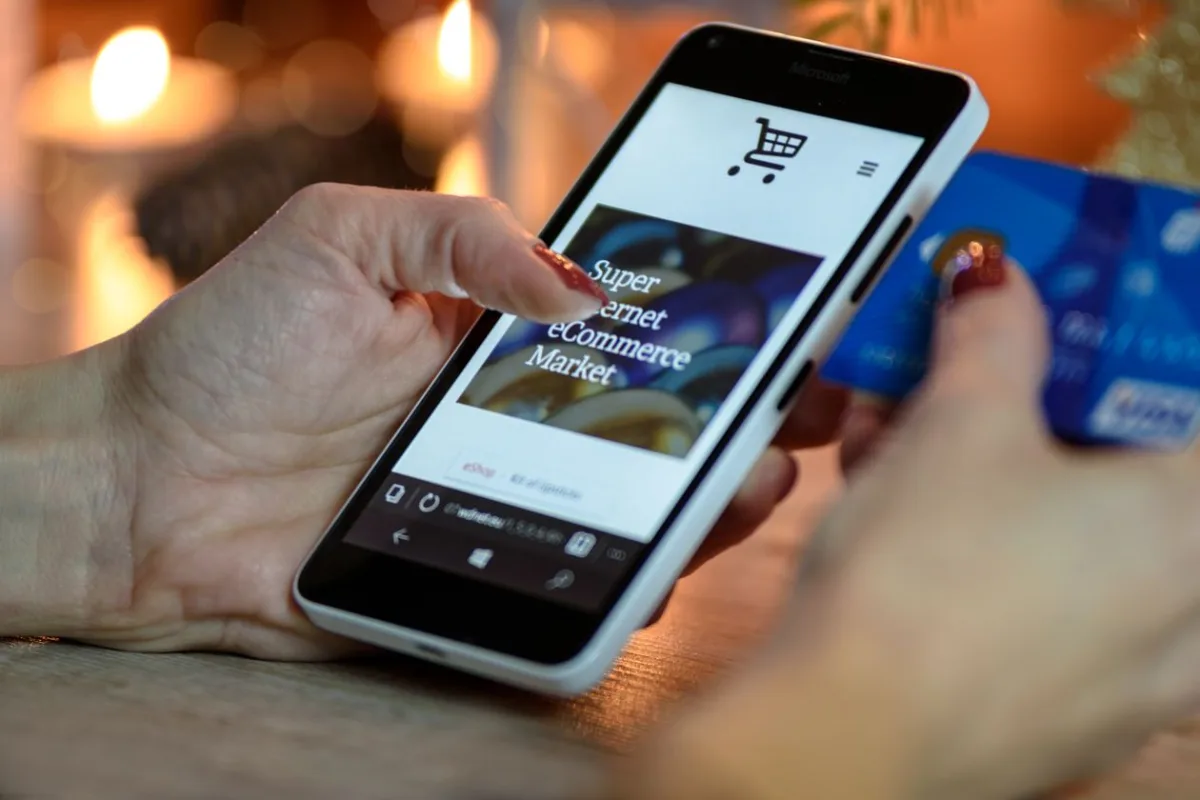
The average checkout form has 14.88 fields, but only 6-8 are actually necessary in most cases (Baymard Institute, 2025). Every additional field is an opportunity for abandonment. The right question isn’t “what data could be useful?” but “what data do I need to process this order?”
Reducing the number of fields from 11 to 8 can increase conversion by 20% on average. To identify which fields cause the most abandonment, CRO surveys directly on the checkout page provide insights that analytics data alone can’t offer.
9. Single-page checkout vs. multi-step
Is a single-page checkout better, or should you split it into steps? There’s no universal answer. The Baymard Institute reports that the average checkout has 5.1 steps with 11.3 form fields. Well-designed multi-step checkouts can improve completion because they reduce cognitive load at each stage. Single-page checkouts tend to work better on mobile with fewer fields.
The current trend is progressive disclosure: showing fields gradually as the user fills them in. Run A/B tests to figure out what works best for your specific case.
10. Full transparency on shipping costs
39% of abandonments are caused by unexpected extra costs. There’s no excuse for the user to discover shipping fees only at the end of checkout. Show shipping costs from the product page, or at least from the cart.
In my experience with CRO projects, the free shipping threshold is one of the most debated tactics with business teams. The pushback makes sense: logistics costs are real. However, when you analyze metrics like LTV and CAC properly, free shipping above a reasonable threshold almost always increases average order value more than it increases shipping costs. The trick is setting the threshold slightly above the current average order value.
11. Visible and generous return policy
What if it doesn’t fit? What if I don’t like it? 15% of users abandon because of an unsatisfactory return policy. Showing “Free returns within 30 days” near the payment button directly reduces that anxiety. Offering free returns can increase return rates, yes, but it also increases sales. The math usually works out.
12. Checkout page load speed
Sites that load in 1 second convert 2.5 times more than those that load in 5 seconds. Each additional second of load time reduces conversion by 4.42% (Portent, 2025). At checkout, where the user is already committed to buying, losing them to slowness is the most avoidable type of abandonment.
13. Limit the visibility of the coupon field
When users see a prominent “Have a discount code?” field, many leave the checkout to search for that code on Google. Not all of them come back. Instead of a visible field, use a discreet link (“Have a code?”) that expands the field only when the user clicks it. Customers who already have a code will look for it. Those who don’t won’t get distracted.
14. Flexible delivery options
Your customer has reached the final step. You don’t want to lose that sale over delivery inflexibility. Offer at least three options: standard home delivery, express shipping, and pickup at a convenience point or store. Depending on your market, pickup points (lockers, partner stores) are growing fast in popularity.
15. Think local when selling internationally
If you sell abroad, adapting the checkout to the local market makes a real difference. Local currency, local payment methods, correct language (don’t use flags for languages; languages are represented by their name: “Francais”, “Deutsch”). Cultural differences in design, color symbolism, and delivery expectations are real and measurable.
16. Clear and helpful error messages
Are you ready for the mistakes your users will make? Because they will make them. Error messages should describe the problem clearly (“Card number must be 16 digits” is better than “Field error”), appear next to the field with the error, and use a highlighted color to visually flag where the problem is.
17. Live chat on the payment page
The checkout page generates more questions and uncertainty than any other. Having a live chat or a “Call us” button directly on the payment page lets you answer questions at the critical moment, before the user decides to leave. An agent resolving a question about sizing, delivery timelines, or return policy can save a sale that would otherwise be lost.
18. Remove distractions (KISS principle)
Most checkout analyses focus on adding trust elements. The opposite approach is equally powerful: removing what distracts or creates anxiety. Taking out the main navigation bar from the checkout significantly reduces accidental exits. Every element on the page should have a clear role and contribute to the single goal: completing the order. If it doesn’t contribute, remove it.
19. Cart recovery emails
With a 70.22% abandonment rate, cart recovery emails are the lowest-effort revenue recovery available. These emails are sent automatically when a shopper adds a product to the cart but doesn’t complete the purchase. To send them, you need the user’s email address, either because you asked for it at the start of checkout or because they’re a registered customer. A sequence of 2-3 emails within the first 24-48 hours recovers between 5% and 15% of abandoned carts.
20. Exit-intent with an incentive
A popup that detects exit intent and offers an incentive (5% discount, free shipping, first-purchase code) can turn abandonments into sales. The key is not to overdo it: limit it to users who’ve spent some time on checkout or who have a cart above a minimum value. And always prefer less aggressive solutions before resorting to this tactic.
A checkout that converts keeps friction low, anxiety lower, and the path to payment as short as possible. These improvements should be paired with product page optimization, since friction starts long before the cart. If you’re driving traffic through paid channels, the Meta Ads for ecommerce guide explains how to align your campaign structure with a high-converting checkout funnel. If you’re preparing your store for seasonal sales peaks, check out the ecommerce checklist for Black Friday.
Want to improve your conversion rate? I offer CRO audits for ecommerce and B2B websites, with qualitative and quantitative analysis to produce actionable hypotheses.
FAQ
What is the average cart abandonment rate in ecommerce?
The Baymard Institute calculates the global average at 70.22%, based on 50 independent studies (Baymard Institute, 2025). The main causes are unexpected extra costs (39%), forced account creation (19%), and a checkout that’s too long (18%).
Which payment methods increase conversion the most?
Shop Pay converts 91% more on mobile than a standard checkout (Shopify, 2025). BNPL adds 14% in additional revenue (Stripe, 2025). Depending on your market, PayPal and at least one installment option (Klarna, Afterpay) are essential.
Is a single-page checkout better than multi-step?
There’s no universal answer. Well-designed multi-step checkouts reduce cognitive load at each stage. Single-page checkouts work better on mobile with fewer fields. The current trend is progressive disclosure. The only way to know for your case is through A/B testing.
How much does guest checkout improve conversion?
Guest checkout can improve conversion by up to 45% (Swell, 2025). 26% of abandonments are caused by forced account creation. Offering registration after the purchase combines the best of both approaches.
Does BNPL integration cannibalize card sales?
No. According to Stripe’s study with 150,000 sessions, two-thirds of BNPL volume is net new sales that wouldn’t have happened without that payment option (Stripe, 2025).
How much does load speed affect checkout?
Each additional second reduces conversion by 4.42%. Sites that load in 1 second convert 2.5 times more than those that load in 5 (Portent, 2025).
How do I measure the impact of each improvement?
Set up the ecommerce funnel in GA4 with begin_checkout, add_payment_info, and purchase events to identify where the biggest drop-off occurs. Combine with CRO surveys on the cart page. Each improvement should be validated with A/B tests. A prior GA4 audit ensures your data is reliable.
Sources
- Baymard Institute - Cart Abandonment Rate Statistics (Sep 2025)
- Baymard Institute - Checkout Usability Research
- Shopify - Shop Pay Checkout (2025)
- Stripe - Testing the Impact of Buy Now Pay Later (2025)
- Smart Insights - Ecommerce Conversion Rates (2025)
- Portent - Site Speed Impact on Conversion (2025)
- Swell - Custom Checkout Statistics (2025)
- eMarketer - BNPL Trends 2026
- Checkout.com - Top 9 Payment Trends 2026
- Klarna - BNPL for ecommerce

Could your ad campaigns
perform better?
30 minutes to review your situation and tell you exactly what I would change. No pitch, no sales proposal.